
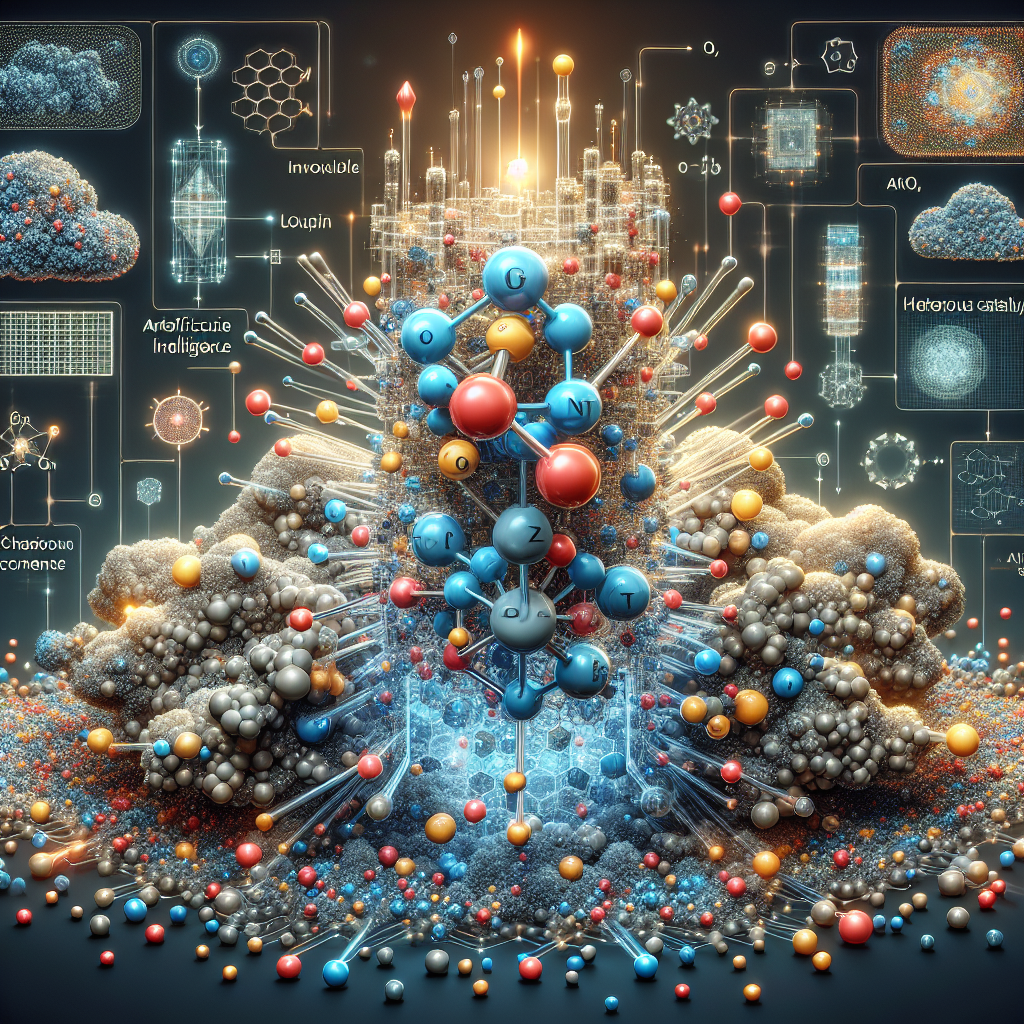
Exploring New Frontiers in Tech: TiO₂ Nanotube-Supported Catalysts and AI Innovations
The world of technology and AI is continuously evolving, with innovations like TiO₂ nanotube-supported catalysts playing a critical role in transformative industrial applications. Why is this important, and how does it align with the broader trends in AI and cloud computing?
The Intersection of Nanotechnology and Catalysis
TiO₂ nanotube-supported Cu(II)-Schiff base complexes are emerging as efficient, heterogeneous catalysts. They enable the crucial A³ coupling reactions under solvent-free conditions. This advancement is groundbreaking, paving the way for sustainable and efficient chemical processes. These catalysts are not only innovative but harness the potential to revolutionize industrial reactions. The catalyst’s ability to function without solvents speaks directly to the increasing demand for greener and more efficient industrial processes.
Implications for Cloud-Based AI Models
The significance of combining advanced nanotechnology like TiO₂ nanotubes with AI and cloud models is immense. By optimizing chemical reactions through predictive analytics, cloud-based AI can support these innovations, aiding in reducing costs and enhancing precision in industrial settings. Companies leveraging Platform-as-a-Service (PaaS) solutions can integrate data analytics with their production technologies, ensuring real-time monitoring and improvements.
Enhancing Artificial Intelligence with Advanced Materials
The interplay of AI with materials science is a promising frontier. Integrating AI for predictive modeling of material behaviors can accelerate the invention of novel nanomaterials. Machine learning algorithms can handle vast datasets, uncovering hidden patterns and predicting material performance under various conditions. This capacity is particularly advantageous for sectors including pharmaceutical, automotive, and environmental technologies.
Emerging Trends and Tools
- Machine Learning: Tools like TensorFlow and PyTorch empower scientists with the ability to model complex materials and reactions efficiently.
- Augmented Reality (AR): Innovative AR tools are now assisting laboratories and industries in visualizing complex nano-scale processes, improving the design phase.
- Cloud Platforms: Amazon Web Services and Microsoft Azure offer robust environments for computational chemistry projects, facilitating large-scale analytics and simulations.
Practical Implications and Examples
The rise of TiO₂-based innovations holds practical applications beyond laboratory settings. Consider how the energy-efficient catalysts can influence sectors such as energy production, contributing to more efficient fuel cell designs and advancing sustainable energy solutions. Moreover, the integration of advanced chemical modeling software could significantly benefit industries, including agriculture, by optimizing fertilizer compositions with minimal environmental impact, all achieved by leveraging powerful cloud computing resources.
These catalysts’ inception not only enriches the chemical industry but propels an entire gamut of sectors toward a more sustainable and efficient future.
To explore our array of AI consulting services, and how they intersect with cutting-edge technologies like these, contact us via Ezra Wave Consulting.
Our team continually shares insights on the intersection of AI, technology, and cloud innovation through our social media platforms. Join and engage with us on Facebook, X, Instagram, and YouTube for more updates and insights.